Why Ingredient Lists Run from Most to Least
Ingredient lists run from most to least by weight. Learn how to check a package for allergens, additives, and other ingredients that matter to your choice.
Ingredient lists run from most to least by weight, but that order is only one way to read a package. For food label decisions, the list can help you check for a named ingredient or an allergen; the Nutrition Facts panel and front-of-package claims answer different questions.
What can an ingredient list tell you?
The list names ingredients used in a packaged food. It can help you identify familiar components, spot ingredients you prefer to avoid, and understand whether a food contains a blend such as a seasoning or sauce.
It is not a complete account of the recipe or how the food was made. An ingredient name does not, by itself, describe the amount used, the ingredient’s source, or the finished product’s nutritional value.
How should you check for an ingredient that matters?
Start with the exact reason you are checking: an allergy, a dietary preference, or a specific ingredient you want to avoid. Read the full list rather than scanning only the first few items, since a relevant ingredient can appear later.
- If you are checking for an allergen: Look through the full ingredient list and any allergen statement. If the information is unclear, do not guess; contact the manufacturer or ask a qualified health professional for guidance.
- If you are avoiding a named ingredient: Search the entire list for that name and terms you recognize as related. If the wording is unfamiliar, check with the manufacturer rather than assuming it means the same thing.
- If you are comparing two products: Check that they serve the same purpose and have similar forms, such as two plain crackers. If they differ substantially, compare only the specific ingredient or feature relevant to your choice.
- If an ingredient appears inside parentheses: Read the parenthetical components as part of a blend, such as a sauce or seasoning. If a component is the item you are checking for, treat its presence as relevant even though it is nested within a mixture.
- If the list uses an unfamiliar additive name: Look for an explanation from a reliable food-safety or regulatory source. If you still cannot tell whether it meets your needs, choose a clearly labeled alternative or seek qualified advice.
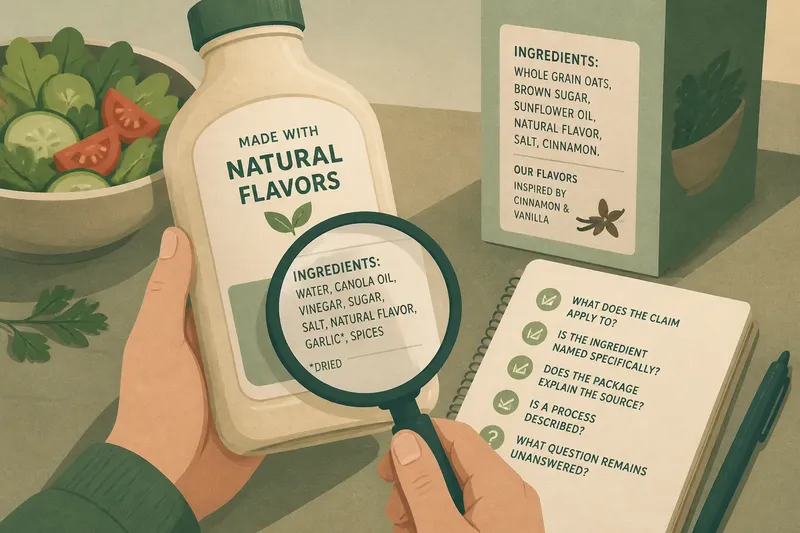
- If the package makes a front-label claim: Check the ingredient list and Nutrition Facts panel for details that matter to you. If those details do not answer the claim you care about, avoid treating the slogan as a full description of the food.
Which package details answer different questions?
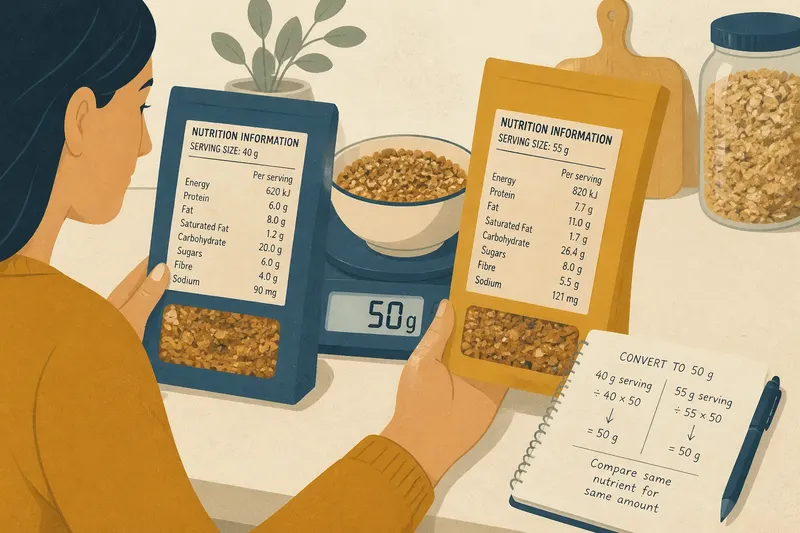
The ingredient list, Nutrition Facts panel, and front label are separate tools. The list names ingredients; the panel provides nutrition information; and front claims use particular terms that may have defined meanings or limits.
For example, “whole grain” on the front does not tell you everything about the product’s ingredients or nutrition. Check the ingredient list for grain names and the Nutrition Facts panel for the nutrients you care about, rather than treating one label element as a substitute for the others.
What should you know about blends and unfamiliar terms?
A compound ingredient is a mixture used as one component of a larger food. A label may show its name followed by components in parentheses, which can clarify what the blend contains without revealing the full formulation.
Food names can vary across products, and some terms may be technical or unfamiliar. It is not worth trying to decode an obscure ingredient from its name alone; use a trustworthy source or ask the manufacturer when the distinction affects your decision.
What questions do readers ask about food ingredient lists?
Does an ingredient list show how nutritious a food is?
No. It names ingredients, while the Nutrition Facts panel gives nutrition information. Use both if you are comparing ingredients and nutrients.
Can a package claim replace reading the list?
No. A front-label claim may address one feature, but it does not provide a complete account of the ingredients. Check the list for components you want to identify or avoid.
What should I do if I cannot identify an ingredient?
Consult a reliable food-safety or regulatory source, or contact the manufacturer. If the ingredient affects an allergy or other health need, ask a qualified professional rather than relying on a guess.
Do parenthetical ingredients count as part of the food?
They identify components of a blend included in the product. If you are checking for one of those components, read the parentheses as part of the ingredient information.
How can you make a focused label decision?
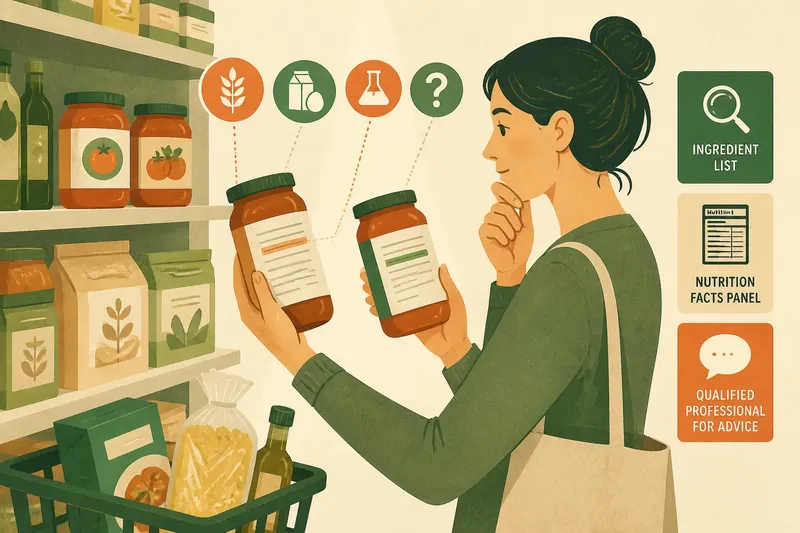
Imagine you are choosing between two fictional jars of pasta sauce because you want to avoid a particular herb. You read both full ingredient lists; one names the herb directly, while the other does not. You set the first jar aside, then check the second label for any wording you do not recognize and contact its manufacturer before relying on it if the wording remains unclear.
For food label decisions, match each question to the package detail designed to answer it: ingredients for what is listed, the Nutrition Facts panel for nutrition information, and a qualified professional for advice about a health concern. That approach is more useful than trying to infer a product’s full recipe or suitability from one phrase on the package.