A Pantry Shelf Read by Ingredient
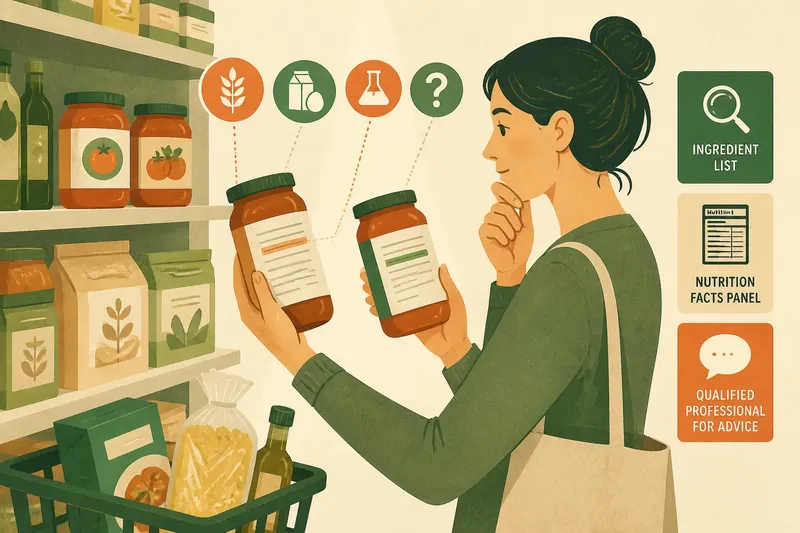
A pantry shelf read by ingredient helps you compare one ingredient across similar packages and make a focused choice without turning the label into an overall ranking.
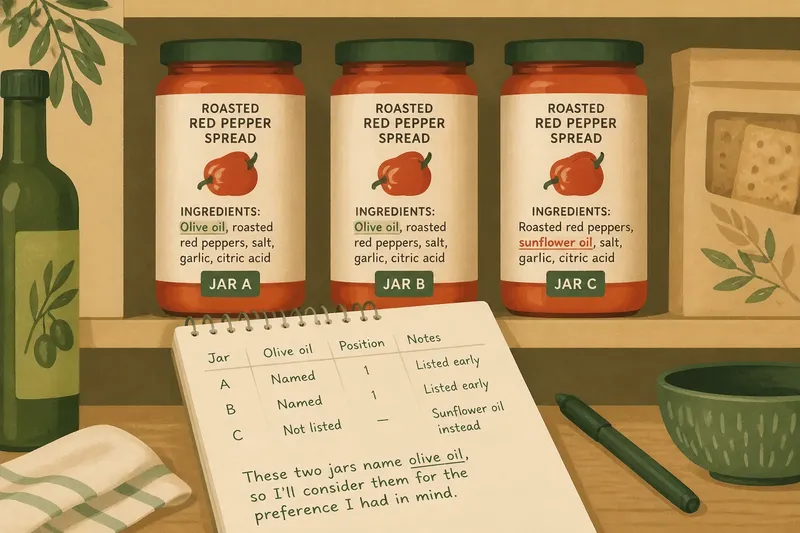
A pantry shelf read by ingredient can help you decide whether a package matches a specific preference, such as seeing olive oil named in a spread. The useful result is a clear note about what the label says—not a judgment about the food as a whole.
What question should the shelf read answer?
Start with a choice you are actually making. You might be comparing tomato sauces because you want one that names basil, or crackers because you are looking for sesame as an ingredient. Keep the question narrow enough that the package wording can answer it.
This exercise is different from comparing nutrition panels, judging processing, or assessing sourcing. It records one detail: whether and where a chosen ingredient is named. It cannot tell you which package tastes best or fits every dietary need.
Pick an ingredient that appears on most of the packages, or one whose presence matters to your preference. If it is absent from a list, record “not listed”; do not treat absence as a late position.
How do you choose packages that make sense to compare?
Stay within a recognizable food group, such as jars of tomato sauce or bags of plain crackers. Products intended for different uses can have different recipes, making a narrow ingredient comparison harder to interpret.
Before reading, decide what counts as a match. A flavored variety may differ from a plain one for reasons unrelated to the ingredient you are tracking. Note that difference, or leave the package out if it distracts from your question.
- Check that the packages are the same broad type of food; if they are, compare them, and if not, choose a closer match.
- Check whether the target ingredient is named consistently; if the wording refers to the same thing, record it, and if not, note the wording or select a clearer ingredient.
- Check for a flavor or special formulation that changes the comparison; if it does, note the difference or set that package aside.
- Check whether a compound ingredient makes the target hard to locate; if the label gives a clear component list, use its wording carefully, and if not, record the ambiguity rather than guessing.
- Check whether your question depends on package size or serving suggestions; if it does, include that information separately, and if not, leave it out of this focused comparison.
- Check whether the choice concerns an allergy or other dietary restriction; if it does, read the full package information and seek qualified guidance where needed, rather than relying on this exercise.
How can you record the label without overreading it?
Write down the product name, the exact ingredient term, and whether it is listed. If you want to compare positions, note the location as printed, but do not turn that location into an amount or a measure of quality.
Some labels include compound ingredients, which are mixtures named within the larger list. If the target appears inside one, record where it occurs and how it is presented; do not silently treat it as equivalent to a separately listed ingredient.
Keep the note simple: “Jar A: olive oil named; Jar B: not listed.” A short record makes the observation easy to use without copying every ingredient on the package.
What can a position difference tell you?
A location in the list is a label detail, not a complete description of a recipe. It does not give an exact quantity, explain the gap between ingredients, or establish how a product will taste.
Ingredients can serve different purposes, so position alone cannot tell you why each one is included. If you need to avoid an ingredient or make a choice related to a health condition, read the full label and consult an appropriately qualified professional when necessary.
Label wording and rules can vary by product and place. If a decision depends on a technical interpretation, check the package’s explanatory information or an authoritative local source rather than guessing.
How would a focused comparison work in practice?
Say you have three jars of roasted red pepper spread and prefer to buy one that explicitly lists olive oil. You write their names on a note, then check each ingredient list: Jar A names olive oil, Jar B names olive oil, and Jar C does not list it. Your recorded result is that A and B match the stated preference, while C does not as labeled.
You then decide whether the remaining choice needs another criterion. If you already prefer the texture of Jar B, you can choose it; if taste or another ingredient matters more, check that detail before deciding. The comparison identifies which jars fit your stated preference, but it does not rank them overall.
Which questions help interpret a pantry shelf read?
Does a label position tell me the exact amount?
No. The position is a feature of the printed list, not a quantity, so it cannot show the amount present or the difference between two products.
What should I record if the ingredient is absent?
Write “not listed” and keep that separate from an ingredient that appears somewhere in the list. This records what you can see without guessing about other formulation details.
Can I compare different brands of the same food?
Yes, if the products are similar enough for the question and the ingredient terms are clear. Note meaningful differences, such as a distinct flavor, that may affect how well the packages compare.
Should the earliest-listed product be my choice?
Not on that fact alone. Use the observation only if it relates to your preference, then consider any other label details or practical needs that matter to you.
What is not worth the effort?
It is not useful to transcribe every ingredient, score whole lists, or convert locations into imagined quantities. Those extra tasks do not answer a focused question more reliably.
You also do not need to keep a permanent rating system. Packaging and formulations can change, so check the current label when the same decision comes up again.
How can you keep the result useful?
End with one sentence that links the observation to the choice: “These two jars name olive oil, so I’ll consider them for the preference I had in mind.” That wording keeps a label detail separate from a broader claim about taste, nutrition, or suitability.
A pantry shelf read by ingredient is most useful when it stays small: define the preference, compare similar packages, record what the labels say, and decide whether another factor matters. If you use the result later, check the package again rather than relying on an old note.